Vision problems do not always begin with dramatic symptoms. Sometimes the first sign is a little more glare while driving at night, difficulty reading fine print, a child sitting too close to the television, or a gradual change in the number of your glasses. In other situations, eye symptoms can appear suddenly and may need urgent attention. Knowing when to visit an eye hospital in Dehradun, and which eye specialist to consult, can help you avoid delay and reach the right department faster.
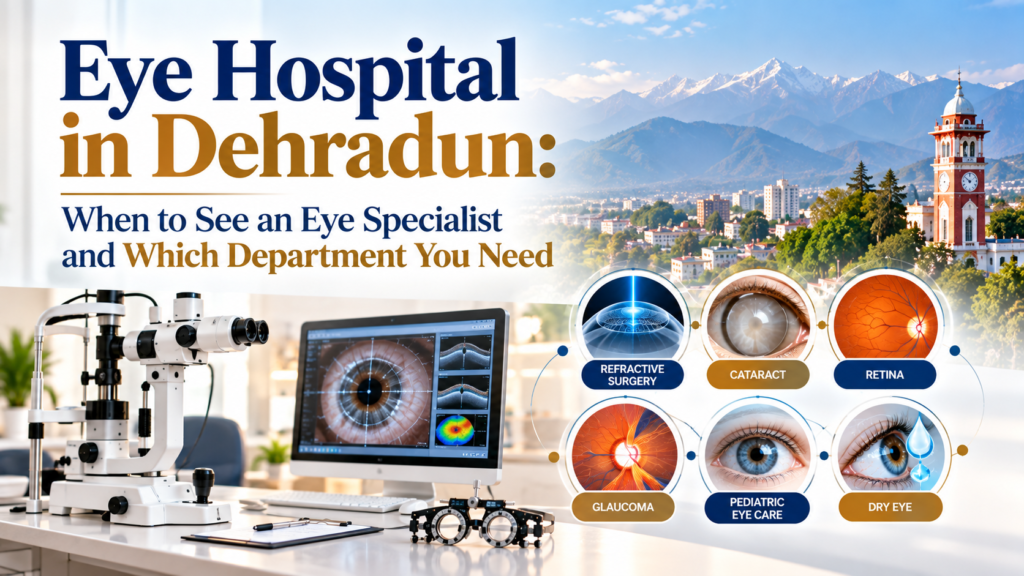
Drishti Eye Institute in Dehradun provides comprehensive eye care across cataract, refractive surgery, retina and uvea, glaucoma, cornea, paediatric ophthalmology, squint, lazy eye and oculoplasty services. The institute was established in 1994 and functions as a tertiary eye care centre with specialists from multiple ophthalmic subspecialties.
This guide is designed for patients and families who are unsure whether an eye problem needs a routine check-up, a specialist consultation or urgent assessment. It also explains the difference between major eye departments so that you can make a more informed appointment.
Why the Right Eye Specialist Matters
The eye is a small Organ, but Ophthalmology includes several different subspecialties. A cataract surgeon manages problems involving the natural lens of the eye. A retina specialist treats diseases affecting the light-sensitive tissue at the back of the eye. A glaucoma specialist focuses on optic nerve damage and eye pressure. Cornea specialists manage the transparent front surface of the eye, while paediatric ophthalmologists deal with eye development and vision problems in children.
This matters because two people with “blurred vision” may need completely different evaluations. One may have cataract, another may have a refractive error, and a third may have a retinal condition. The symptom alone does not always identify the cause.
A comprehensive eye hospital in Dehradun can be particularly useful when symptoms overlap, when the diagnosis is not obvious, or when a patient has more than one eye condition. Access to different specialists under one system also helps when a case needs combined evaluation, such as a cataract patient with glaucoma, a diabetic patient with retinal changes, or a child with squint and amblyopia.
Eye Symptoms That Should Not Be Ignored
Some eye problems develop slowly, while others can threaten vision in a short period. It is useful to separate urgent warning signs from Symptoms that usually need a scheduled examination.
Sudden loss or major reduction of vision
A sudden inability to see clearly from one or both eyes should be treated as urgent. Sudden vision loss may have several causes, including problems involving the retina, optic nerve, blood circulation or other structures of the eye. It should not be managed by simply changing glasses or waiting for the vision to improve on its own.
New flashes, floaters or a curtain-like shadow
A few longstanding floaters can be common, especially with age. However, a sudden shower of new floaters, flashes of light, blurred vision or a dark curtain or shadow moving across the field of vision requires prompt retinal evaluation. These symptoms can sometimes occur when the vitreous gel inside the eye changes, but they can also be associated with retinal tears or retinal detachment.
Patients looking for a retina hospital in Dehradun should prioritise timely examination when such symptoms are new or rapidly increasing.
Severe eye pain, redness and blurred vision
Intense eye pain together with redness, blurred vision, headache, nausea or halos around lights can occur in certain acute eye conditions, including acute angle-closure glaucoma. This needs urgent medical attention. A painful red eye should not be assumed to be routine conjunctivitis without proper evaluation, especially when vision is affected.
Gradually increasing glare, halos and cloudy vision
Cataract often develops gradually. Common complaints include cloudy or blurred vision, reduced contrast, difficulty driving at night, glare from headlights, faded colours and repeated changes in spectacle power. If these symptoms interfere with work, reading, mobility or driving, a cataract evaluation can help determine whether surgery is appropriate.
For patients researching a cataract hospital in Dehradun, the decision should be based on a complete eye examination, the effect of cataract on daily life, the health of the retina and optic nerve, and a discussion about suitable intraocular lens options.
Loss of side vision or a family history of glaucoma
Glaucoma may develop with few or no noticeable symptoms in its early stages. That is why regular eye examinations are important, especially for people with a family history of glaucoma, increasing age, previous eye pressure problems or other risk factors. By the time peripheral vision loss becomes obvious, damage may already be significant.
A glaucoma evaluation may include measurement of eye pressure, examination of the optic nerve, visual field testing and other imaging or diagnostic tests depending on the patient.
Vision changes in people with diabetes
Diabetes can affect the retina before a person notices symptoms. Diabetic retinopathy may remain silent in its early stages, while later disease may cause blurred vision, dark spots, floaters or more serious visual loss. People with diabetes should follow the eye examination schedule recommended by their treating doctors and should not wait for symptoms to appear.
Eye problems in children
Children do not always know how to describe poor vision. Parents may notice that a child sits very close to screens, tilts the head, closes one eye, rubs the eyes frequently, has an eye that turns inward or outward, struggles to see the board, or avoids reading. Squint and lazy eye are especially important to identify early because visual development occurs during childhood.
A paediatric ophthalmology hospital in Dehradun should be able to assess refractive error, eye alignment, binocular vision, amblyopia, congenital conditions and other childhood eye disorders.
Which Department Should You Visit at an Eye Hospital in Dehradun?
Choosing the correct department can make the consultation more efficient. The following guide explains the main services available at Drishti Eye Institute and the types of problems generally assessed in each area.
Cataract and anterior segment services
Cataract occurs when the natural lens of the eye becomes cloudy. Ageing is the most common reason, but cataract can also appear earlier in some people. Evaluation generally includes checking visual acuity, eye pressure, the lens, cornea, retina and other structures before surgery is planned.
Drishti cataract service: https://www.drishti.in/cataract-service
Patients searching for the cataract hospital in Dehradun should avoid choosing only on the basis of advertising claims. More useful questions include: Who will evaluate the eye before surgery? Is the retina healthy? Which lens is suitable for my visual needs? What are the expected limitations? How will follow-up be handled? A transparent discussion of these points is more valuable than a one-size-fits-all recommendation.
LASIK, SMILE, Contoura, Femto LASIK, ICL and ASA
People who want to reduce dependence on glasses often begin by searching for LASIK surgery in Dehradun. However, not every patient is suitable for the same vision correction procedure.
Refractive surgery planning may depend on age, spectacle power, corneal thickness and shape, stability of prescription, ocular surface health and other factors. Depending on evaluation, a patient may be considered for LASIK, Femto LASIK, Contoura LASIK, SMILE, ICL or surface-based procedures such as ASA.
Drishti refractive services: https://www.drishti.in/refractive-services
The key point is that the “LASIK eye surgery” is not a single procedure for everyone. The appropriate option should be selected after detailed screening. A person with high refractive power, thin or irregular cornea, dry eye, keratoconus risk or other findings may need a different approach from someone who is an ideal LASIK candidate.
For patients specifically researching ReLEx SMILE surgery in Dehradun, ICL surgery in Dehradun, Contoura LASIK surgery in Dehradun, Femto LASIK in Dehradun or ASA surgery in Dehradun, pre-operative evaluation is the step that determines suitability.
Patients searching for LASIK surgery cost in India Should also remember that a responsible quotation depends on the procedure advised, pre-operative testing, technology used and the individual eye. Drishti’s website does not list a fixed current LASIK price, so patients should confirm costs directly after evaluation rather than relying on an unverified online figure.
Retina and uvea services
The retina is the light-sensitive layer at the back of the eye. Retinal diseases may affect central vision, peripheral vision or both. Common reasons for retinal assessment include diabetic retinopathy, retinal tears or detachment, macular disease, retinal vascular problems, vitreous haemorrhage and uveitis.
Drishti retina service: https://drishti.in/retina-service
Patients should seek prompt retinal evaluation for new flashes, a sudden increase in floaters, a dark curtain in vision, sudden distortion, unexplained visual loss or vision changes associated with diabetes.
Because some retinal conditions can progress without pain, a comfortable eye does not always mean the retina is healthy.
Glaucoma services
Glaucoma is a group of diseases that damage the optic nerve. Raised eye pressure is an important risk factor, but glaucoma can also occur when pressure readings are within a statistically normal range. Early disease may not produce noticeable symptoms.
Drishti glaucoma service: https://www.drishti.in/glaucoma-service
People with a family history of glaucoma, previous high eye pressure, increasing age or suspicious optic nerve findings may need periodic monitoring. Treatment can include eye drops, laser procedures or surgery depending on the type and severity of glaucoma.
When comparing a glaucoma hospital in Dehradun, look for access to proper diagnostic testing and long-term follow-up because glaucoma care is usually an ongoing process rather than a one-time treatment.
Cornea and corneal transplantation
The cornea is the clear front surface of the eye. Infection, injury, keratoconus, scarring, swelling, dry eye and other conditions can affect corneal clarity or shape.
Drishti cornea services: https://drishti.in/cornea-services
The institute also has information on corneal transplantation for conditions in which the cornea becomes severely damaged or opaque. Corneal transplant is not required for every corneal problem. The need for transplantation depends on the layer involved, the degree of visual impairment, the underlying disease and whether other treatments can restore useful vision.
Patients searching for a corneal transplantation hospital in Dehradun should expect a specialist assessment before any surgical plan is discussed.
Paediatric ophthalmology, squint and lazy eye
Children need a different style of eye examination from adults. Paediatric ophthalmology includes assessment of visual development, refractive errors, congenital eye problems, squint, amblyopia and other childhood conditions.
Drishti paediatric ophthalmology: https://www.drishti.in/paediatric-ophthalmology
Squint means the eyes are not aligned in the same direction. Lazy eye, or amblyopia, refers to reduced vision caused by abnormal visual development. The two conditions can be related but are not identical. Treatment may involve glasses, patching, treatment of the underlying cause, exercises in selected cases or surgery for eye alignment depending on the diagnosis.
Early assessment is particularly important because the visual system develops during childhood. Families searching for a squint hospital in Dehradun or lazy eye hospital in Dehradun should prioritise a paediatric eye assessment rather than waiting for the child to “grow out of” a persistent eye turn or visual problem.
Oculoplasty services
Oculoplasty deals with the eyelids, tear drainage system, orbit and surrounding tissues. Patients may be referred for drooping eyelids, eyelid malposition, watering due to drainage problems, trauma, orbital conditions or certain reconstructive and functional procedures.
A comprehensive eye hospital can help distinguish whether a symptom such as watering, swelling or eyelid droop is primarily a surface problem, an eyelid problem, a tear drainage problem or part of another eye condition.
What Happens During a Comprehensive Eye Examination?
A complete eye examination is more than reading letters from a chart. The exact tests depend on your age, symptoms and medical history, but an ophthalmic assessment may include:
- Visual acuity testing to measure how clearly each eye sees.
- Refraction to check spectacle power.
- Slit-lamp examination of the eyelids, cornea, anterior chamber and lens.
- Eye pressure measurement when indicated.
- Dilated retinal examination when the back of the eye needs assessment.
- Corneal mapping or topography for refractive surgery or corneal disease.
- Optical coherence tomography, visual field testing or retinal imaging when clinically required.
- Squint and binocular vision assessment in children or adults with alignment problems.
Do not worry if not every test is performed at every visit. Eye care is diagnosis-driven. The doctor selects investigations according to the problem being evaluated.
How Drishti Eye Institute Supports Multispecialty Eye Care
Drishti Eye Institute was established in 1994 and is located at 16 Subhash Road, Astley Hall, Dehradun. Its official website lists services across cataract and refractive surgery, retina and uvea, glaucoma, cornea, paediatric ophthalmology, squint, lazy eye and oculoplasty.
The current panel of doctors includes specialists across cataract and refractive surgery, vitreoretinal surgery, glaucoma, cornea, oculoplasty and other ophthalmic fields. This multidisciplinary structure is useful when one patient needs input from more than one specialty.
For example, a cataract patient with a retinal disorder may need both cataract and retina evaluation. A person considering LASIK may need corneal screening before a refractive procedure is advised. A child with squint may also require refraction and amblyopia management. A diabetic patient may need periodic retinal examinations even when vision seems normal.
This is one of the practical advantages of choosing a multispecialty eye hospital in Dehradun rather than treating each symptom in isolation.
How to Prepare for Your Eye Appointment
A little preparation can make the consultation more useful.
- Bring your current glasses and, if available, older prescriptions. Changes over time can provide valuable information.
- Carry a list of medicines and medical conditions, especially diabetes, hypertension, autoimmune disease or previous eye surgery.
- If you use contact lenses and are coming for a refractive surgery evaluation, ask the hospital whether you should stop wearing them for a period before corneal measurements.
- Write down when the symptoms started, whether they affect one or both eyes, and whether they are constant or intermittent.
- If your pupils may be dilated, vision can remain blurred and light-sensitive for a period after the examination. Consider arranging transport if you are uncomfortable driving after dilation.
- For a child, bring previous spectacle prescriptions, school vision reports or earlier eye records if available.
Preventive Eye Care Is Important Even Without Symptoms
Many people visit an eye doctor only when vision becomes blurred. That approach can miss conditions that remain silent in their early stages.
Glaucoma is a good example because early disease may not be noticed by the patient. Diabetic retinopathy may also begin before obvious visual symptoms. Children with unequal vision between the eyes may not complain because they rely on the stronger eye.
Regular comprehensive eye examinations are particularly important for people with diabetes, a family history of glaucoma, previous eye disease or surgery, high spectacle powers, long-term medication that can affect the eyes, or advancing age.
The frequency of examination should be individualised by an ophthalmologist based on age, risk factors and previous findings.
Choosing an Eye Hospital in Dehradun: Questions Worth Asking
Online searches often use phrases such as “eye hospital in Dehradun,” “eye doctors in Dehradun,” “LASIK hospital in Dehradun,” “retina hospital in Dehradun,” “cornea hospital in Dehradun” or “oculoplasty hospital in Dehradun.” These terms are useful for discovery, but the final choice should depend on verifiable factors.
Ask whether the hospital has the appropriate specialist for your condition. Check whether required diagnostic tests are available. Understand who will perform the procedure and who will handle follow-up. Ask what alternatives exist and why one treatment is being recommended over another. Request a clear explanation of expected benefits, limitations, recovery and possible complications.
For refractive surgery, suitability screening is more important than choosing a procedure based on a promotional name. For cataract surgery, lens selection should reflect the health of the eye and the patient’s visual needs. For glaucoma and retina disease, long-term monitoring and timely follow-up can be as important as the initial treatment.
People also search broad terms such as “eye hospital in India,” “top eye hospital in India,” “LASIK eye surgery in India” and “LASIK surgery in India.” These searches can be a starting point, but there is no single procedure or hospital that is objectively for every patient. The more useful comparison is whether the centre has the right specialist, diagnostics, treatment options and follow-up pathway for your specific condition.
For local care, searches such as “eye hospital near Dehradun” or “eye hospital near me” should also be judged by access, subspecialty coverage and the ability to obtain follow-up when needed, rather than distance alone.
A good consultation should leave you with a clear understanding of the diagnosis and the next step.
When an Eye Problem Is an Emergency
Seek urgent ophthalmic or emergency medical attention if you develop:
- Sudden loss of vision in one or both eyes.
- A sudden shower of floaters or flashes, especially with a curtain or shadow in vision.
- Severe eye pain with redness, blurred vision, nausea or headache.
- Significant eye injury or chemical exposure.
- Sudden double vision with other neurological symptoms.
- Rapidly worsening vision after eye surgery.
Do not delay urgent care while searching online for a specific diagnosis. Many eye conditions have overlapping symptoms, and only an examination can determine the cause.
Frequently Asked Questions
1. When should I visit an eye hospital in Dehradun?
You should arrange an eye examination if you have persistent blurred vision, glare, frequent spectacle changes, eye strain, redness, watering, headaches related to visual work, floaters, flashes, difficulty seeing at night or concerns about a child’s vision. Sudden vision loss, severe eye pain, new flashes and floaters with a shadow in vision, or significant eye injury require urgent assessment.
2. How do I choose the eye hospital in Dehradun for my condition?
Instead of relying only on the check whether the hospital has a specialist for your specific problem, appropriate diagnostic facilities, a clear treatment pathway, transparent counselling and follow-up care. A multispecialty centre can be useful when more than one part of the eye is involved.
3. Which doctor should I see for cataract?
A cataract and anterior segment ophthalmologist evaluates cataract, checks the health of the rest of the eye and discusses whether surgery is needed. The consultation may also include measurement for an intraocular lens and discussion of lens options based on visual requirements.
4. Is LASIK suitable for everyone who wears glasses?
No. LASIK suitability depends on factors such as age, stability of spectacle power, corneal thickness and shape, ocular surface health and the overall condition of the eye. Some people may be better suited to Femto LASIK, Contoura, SMILE, ICL or another approach, while others may be advised not to undergo refractive surgery.
5. What is the difference between LASIK, SMILE and ICL surgery?
LASIK reshapes the cornea using laser treatment after creating a corneal flap. SMILE is a small-incision, flapless laser procedure for selected refractive errors. ICL involves placing an implantable lens inside the eye without removing the natural lens. The appropriate procedure depends on detailed pre-operative evaluation.
6. When should I see a retina specialist?
See a retina specialist promptly if you develop new flashes, a sudden increase in floaters, a curtain-like shadow, sudden distortion or unexplained loss of vision. People with diabetes may also need periodic retinal examination even when they have no symptoms.
7. Can glaucoma develop without symptoms?
Yes. The most common forms of glaucoma may progress slowly without obvious early symptoms. Regular eye examinations are important for people at higher risk, including those with a family history of glaucoma or previous high eye pressure.
8. When should a child have an eye examination?
A child should be examined when parents or teachers notice squint, head tilting, closing one eye, sitting too close to screens, difficulty seeing the board, frequent eye rubbing, poor reading performance or other visual concerns. Children with known risk factors or previous eye problems may need scheduled follow-up even without symptoms.
9. What symptoms can indicate a corneal problem?
Corneal conditions may cause pain, redness, light sensitivity, watering, blurred vision, recurrent irritation or progressive distortion of vision. Keratoconus can cause increasing astigmatism or frequent spectacle changes. Corneal infections and injuries should be assessed promptly.
10. How can I book an appointment at Drishti Eye Institute in Dehradun?
Drishti Eye Institute lists appointments at 16 Subhash Road, Opposite Hotel Pacific, Astley Hall, Dehradun – 248001. Appointment numbers on the official website are +91-135-2717500 and +91-7088103502.
Online appointment page:https://drishti.in/appointment.php
Book an Eye Consultation in Dehradun
If you have a new eye symptom, a known eye condition, a change in spectacle power, or need an opinion regarding cataract, LASIK, SMILE, ICL, retina, glaucoma, cornea, squint, paediatric ophthalmology or oculoplasty, a comprehensive evaluation is the safest starting point.
Drishti Eye Institute
16 Subhash Road, Opposite Hotel Pacific, Astley Hall
Dehradun – 248001
Phone: +91-135-2717500
Mobile/WhatsApp: +91-7088103502
LASIK/SMILE: +91-8755150900
Website: https://drishti.in/
Appointment: https://drishti.in/appointment.php
OPD timings listed on the official website: Monday to Saturday, 8:00 AM to 7:00 PM; Sunday, 9:00 AM to 1:00 PM.
Conclusion
Choosing an eye hospital in Dehradun should begin with the problem you need evaluated, not simply with a procedure name. Cataract, glaucoma, retina disease, corneal disorders, refractive errors, childhood eye problems and eyelid conditions require different expertise and different investigations.
The most important step is timely diagnosis. Gradual symptoms deserve proper evaluation, and sudden symptoms such as acute vision loss, severe pain, new flashes and floaters or a curtain-like shadow should be treated as urgent.
Drishti Eye Institute offers multiple ophthalmic specialties under one roof in Dehradun, allowing patients to access cataract and refractive care, retina and uvea services, glaucoma, cornea, paediatric ophthalmology, squint, lazy eye and oculoplasty services through a coordinated eye care setting.